
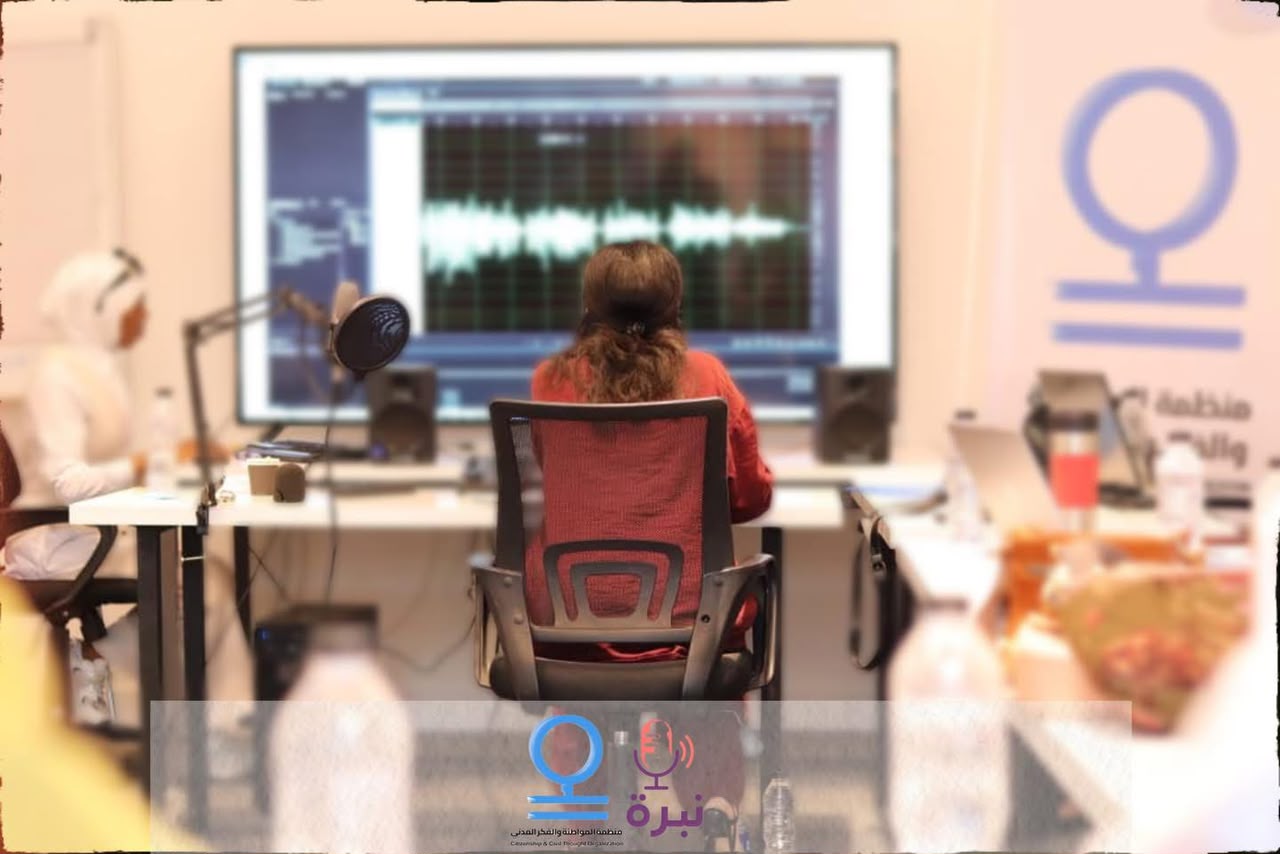
In an era dominated by visual and audio content in the digital sphere, voice is no longer merely a means of expression, but has transformed into a strategic tool for economic and intellectual empowerment. This is the context for the "voice-over" track within the Nabra project, which focuses on honing the talents of creative young women and setting them on the path to professionalism.
Voice-over fields: Beyond the microphone
Voice-over isn't a single format; it's a vast world with diverse styles depending on the message being conveyed. Throughout our training programs, we focused on equipping participants with five key skills required by today's job market:
-
Documentaries: Performance requires composure and depth to convey human facts and stories.
-
Commercial advertisements: Which relies on enthusiasm, charisma, and the ability to persuade in a matter of seconds.
-
Interactive Voice Response (IVR): It is an area that requires a calm, clear, and welcoming tone that represents the corporate identity of companies.
-
Promotional videos and educational content: It simplifies complex concepts in a smooth style that ensures listener engagement.
The fundamental techniques behind professional performance
Producing a professional voice-over artist requires intensive physical and mental training. It's not just about vocal quality, but also includes:
-
Breathing control: Practicing diaphragmatic breathing to give the voice strength and stability during long readings.
-
Articulation of letters and vocal composition: Adjusting the pronunciation and tone to match the emotional state of the text (sadness, joy, seriousness, excitement).
-
Text analysis: Understanding what is between the lines and knowing where to pause (artistic pauses) to give the listener space to absorb the idea.
The challenge of artificial intelligence and the digital portfolio
With the rise of AI-powered voice-generating tools, the workshop discussed the impact of these technologies on the job market. The training concluded that the "human spirit" and the ability to genuinely engage emotionally with texts are a competitive advantage that machines cannot replicate. Participants concluded their journey in a fully equipped studio, each producing a personalized voice portfolio—their professional passport to the freelance market and the development of their independent career path.